


Water Security and High Mountain Ecosystems

The Vital Duality of the High Mountains
High mountain ecosystems, particularly páramos and peatlands, are the first line of defense in our quest for water security and climate change mitigation. At The Ecosystem Carbon Conservation S.A.S, we recognize that successful environmental management cannot focus on a single variable; it is imperative to retain carbon-related indices alongside water security factors. Peatlands perfectly illustrate this duality: they act as massive carbon sinks while critically regulating the hydrological cycle.
The Power of High Mountain Peatland Ecosystems Against Climate Change and in favor of Water Security
Peatlands are wetlands composed of thick layers of partially decomposed plant material (peat) that have been accumulated over millennia. Although they cover only a small fraction of the Earth's surface, they store one-third of the global soil carbon. In fact, peatlands store 10% of the planet's unfrozen freshwater, making them essential for the health of communities.
These ecosystems function as true natural sponges, absorbing excess water during heavy rainfall to prevent flooding and releasing it slowly during dry seasons to mitigate droughts. Protecting and rewetting peatlands are fundamental strategies in the climate and water scarcity fight; their drainage or degradation immediately turns them into massive sources of emissions.

Quantifying Benefits: VWBA and WQBA Methodologies
To translate peatland conservation into tangible environmental metrics, international guidelines establish a rigorous accounting framework. The first step of the process involves understanding the local watershed context and assessing shared water challenges. Once identified, quantification requires applying practical and scientifically defensible methods.
For the protection and restoration of ecosystems, methodologies are divided into two main approaches:
Volumetric Benefits (VWBA - Volumetric Water Benefit Accounting): Focuses on measuring the amount of water recharged, captured, or retained by the ecosystem, comparing the conditions with and without the conservation project.
Quality Benefits (WQBA - Water Quality Benefit Accounting): Evaluates improvements in the physical and chemical characteristics of water resulting from conservation and restoration actions, ensuring the resource is suitable for sustaining biodiversity and downstream communities.
Practical Monitoring: Hydrological Precision
The implementation of these methodological frameworks requires a robust hydrological monitoring design that guarantees the traceability and representativeness of the data collected in the field. To support the metrics of volumetric and quality benefits with high-level scientific evidence, it is essential to establish an in situ instrumentation network focused on capturing the structural dynamics of the ecosystem.
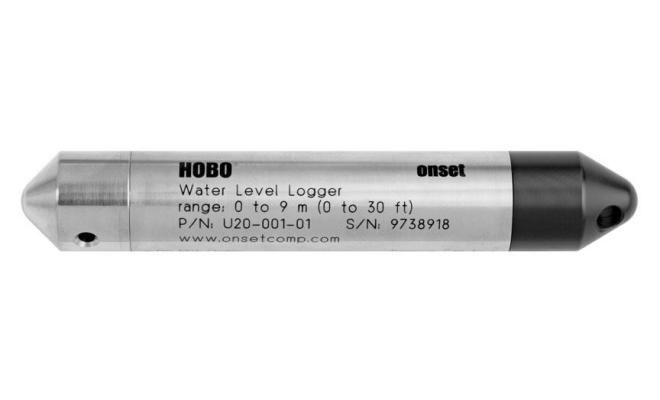
To measure volumetric benefits (VWBA), the deployment of piezometers equipped with water level loggers is fundamental. These instruments provide us with continuous and precise data on the water table. This is complemented by rain gauges to measure precipitation input and soil moisture sensors that allow us to understand the peat's retention capacity.
On the other hand, to evaluate improvements in water quality (WQBA), the implementation of multiparameter probes is essential. These submersible devices allow the integration of various proven research-grade sensors to monitor critical variables in real-time, such as:
pH and Dissolved Oxygen (DO): Fundamental indicators of the aquatic ecosystem's biological health. For this, the equipment couples potentiometric glass electrodes (for pH) and luminescent optical sensors (LDO) for dissolved oxygen, which offer high precision and less drift compared to traditional sensors, minimizing field maintenance.
Electrical Conductivity (EC): Vital for tracking the concentration of dissolved ions and the purity of the water filtered by the peatland. Its reading is performed using four-electrode conductivity cells, a design that prevents polarization errors and is highly resistant to fouling in swampy environments.
Turbidity: Allows demonstrating how intact vegetation reduces erosion and sediment load towards lower basins. It is measured using nephelometric optical sensors (generally complying with regulations like ISO 7027), which detect the 90-degree scattering of light caused by suspended particles.
Dissolved Organic Carbon (DOC): Considering that peatlands are the densest carbon deposits on the planet, monitoring how much of this material is exported through the hydrological system is indispensable for climate accounting. In the field, this variable is continuously quantified by coupling fluorescent dissolved organic matter (fDOM) optical sensors or via submersible UV-Vis spectrophotometers. These devices act as a highly reliable proxy for measuring DOC in real-time, avoiding exclusive dependence on expensive laboratory sample analysis.
Conclusions
The protection of high mountain ecosystems, and especially the peatlands found there, requires an integral approach. By aligning the exact water table and water quality monitoring with international accounting standards (VWBA and WQBA), we validate our ecological impact with robust data. Furthermore, we set an invaluable technical precedent, since these global methodologies were the fundamental basis for the creation of the NTC 6766 standard for Water Security, Volumetric Water Benefit (BVA).
This regulation provides a standardized and adapted framework to evaluate the real volumetric benefits of environmental projects at the local level. We will delve specifically into the applications, challenges, and advantages of implementing NTC 6766 in one of our next blogs. For now, our commitment is to continue ensuring, with precise metrics, that peatlands remain the silent guardians of our climate and our water.

Bibliography
The Nature Conservancy. (n.d.). The Power of Peatlands. Retrieved July 22, 2026, from https://www.nature.org/en-us/what-we-do/our-priorities/tackle-climate-change/climate-change-stories/peatlands-climate-change/
World Resources Institute, LimnoTech, Bluerisk, & Bonneville Environmental Foundation. (2025). Volumetric Water Benefit Accounting 2.0: Guidance for implementing, evaluating, and claiming volumetric water benefits of water stewardship projects (Guidebook). World Resources Institute. https://doi.org/10.46830/wrigb.23.00112
Colombian Institute of Technical Standards and Certification (ICONTEC). NTC 6766: Water Security. Volumetric Water Benefit (BVA).
Onset Computer Corporation. (n.d.). Onset HOBO and InTemp data loggers. Retrieved August 14, 2026, from https://www.onsetcomp.com/


<3